This is what a financial shock looks like when it lands on real people
A waitress spending 75% of her pay on gas. Farm bankruptcies up 46%. And a stock market at record highs. This is the month in full.
A waitress spending 75% of her pay on gas. Farm bankruptcies up 46%. And a stock market at record highs. This is the month in full.

This month we followed a single conflict from the Gulf to your gas tank, your grocery store and the Federal Reserve. This week we follow it one step further. To a packing shed in Georgia. To a banker in North Dakota. To a 17-year-old waitress who spends 75% of her pay on gas and no longer has money for movie tickets.
The market hit record highs this week. A financial journalist in San Francisco asked a financier whether events in Iran worried him. He shrugged. "Look at the markets," he said. "They are doing great."
He was looking at the wrong thing.
[You can catch up on last week's issue here.]
Dexter Pierce, Founder
The human cost of everything this month covered. What the numbers look like when they land on real people in real places.
The market at record highs while the economy struggles. Why those two things can be true at the same time and what it means for your retirement.
The safety buffers built after 2008 are being quietly dismantled. What the global banking deregulation fight means for the system protecting your savings.
The question worth asking this week. When you retire and start drawing from your savings, who decides how much of it you actually keep?
46% — The rise in farm bankruptcies in 2025. Before this year's planting season has even finished.
$5.40 — The current price per gallon of diesel fuel, up 40% since the end of February. Row crop farmers burn tens of thousands of gallons a year. A $1 increase eats directly into margins that were already thin.
25% — The new tariff rate Trump announced this week on EU vehicles, escalating trade tensions and threatening to unravel the agreement struck between Washington and Brussels last summer.
$54 billion — The amount of capital freed up across the American banking sector by recent Fed rule relaxations. Capital that used to serve as a protective buffer against the kind of systemic shock the world has been navigating all month.
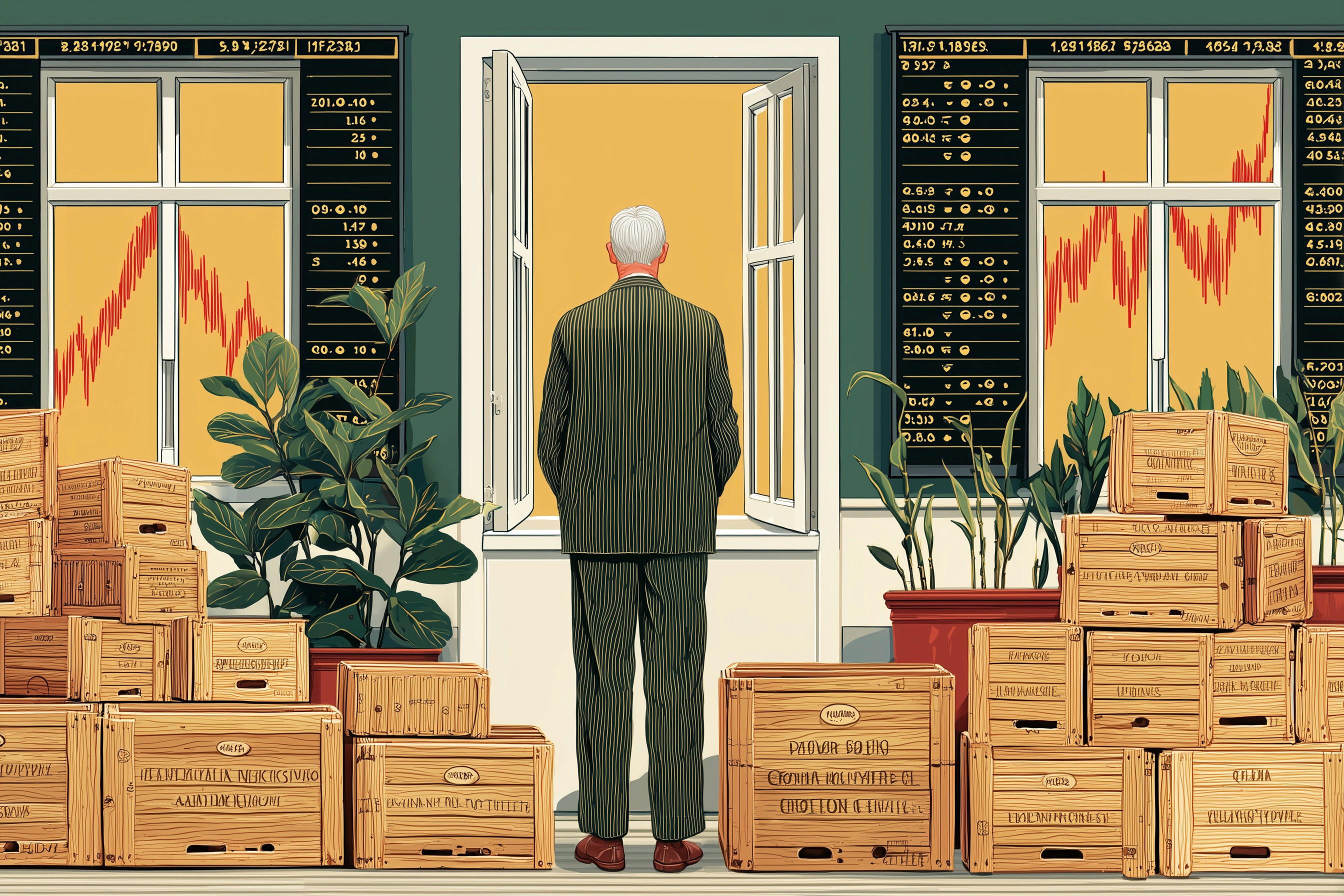
Sam Watson farms in southern Georgia. He grows eggplant, bell pepper and squash. He is also a Republican state senator. This spring he returned from Atlanta just in time to put seeds in the ground for what he thinks might be his last harvest season.
"We used to just pray for rain," he says. "Now we're praying on geopolitics, too."
This month we tracked a conflict in the Gulf through energy markets, food supply chains, global trade policy and the Federal Reserve. This week that same conflict arrived somewhere more personal. On the farms where American food is grown. In the towns that depend on those farms. And in the financial lives of people who had nothing to do with the decisions that created the situation they are now navigating.
The numbers are stark. Diesel is up 40% since February. Fertilizer prices have surged by a similar amount. Farm bankruptcies rose 46% in 2025. A cotton farmer in Georgia is cutting fertilizer by 15% and fears it will cost him his yields. "Taking fertilizer away from a crop is like taking oxygen from a human," he says. A banker in North Dakota expects most of his farm borrowers to lose money this season. "They're planning for profitability but they're fighting for survival," he says. "Breaking even would be one heck of a win."
A 17-year-old waitress in Moultrie, Georgia works six nights a week and spends 75% of her pay on petrol. Her family no longer has spare cash for what she describes as normal teenage things. A recent poll found that 27% of rural Americans say it would be impossible to cover an unexpected $1,000 bill.
Meanwhile, in San Francisco this week, financiers were talking about AI startups, SpaceX and the S&P 500. The index sits 30% above where it was when this conflict began. Almost 80% of S&P 500 companies beat earnings estimates last quarter. Markets are at record highs.
Both of these things are true at the same time. That is not a contradiction. It is a diagnosis.
The market is not a measure of how the economy is doing. It is a measure of how the wealthiest 10% of Americans are doing, the group that owns 88% of all equities. When that group is doing well and everyone else is absorbing the real world cost of a supply shock, both numbers can be accurate simultaneously. The financier in San Francisco is not lying when he says the markets are great. He is just looking at a very narrow slice of the picture and calling it the whole thing.
This is the most important financial literacy lesson this month delivered. What you see in your portfolio is not the same as the health of your financial foundation. A green number on a screen does not tell you whether your retirement income is protected from the kind of shock this month described. It does not tell you whether your cost of living assumptions will hold. It does not tell you whether the purchasing power of your retirement income will be intact in ten years.
Those questions require a different kind of looking.

While markets hit record highs and the world watched the Gulf war, something quieter was happening inside the global banking system.
The capital buffers built after the 2008 financial crisis, the rules that took two decades of careful international diplomacy to construct, are being quietly relaxed. The Federal Reserve has freed up an estimated $54 billion in capital across the American banking sector by loosening requirements. Europe and Britain, fearing competitive disadvantage, are following suit.
As one observer put it this week, just because rules for international finance took two decades of careful diplomacy to draft does not mean they cannot be undone in a jiffy. Just ask the World Health Organization or NATO.
The system most people assume is protecting their savings is becoming more leveraged, quietly, while everyone is watching something else.
This month set out to show you something specific. That the world does not stay outside your financial life. It finds its way in whether you are watching or not.
The question was never whether a conflict in the Gulf would affect your economy. It was whether your foundation was built to hold when it did.
This week on our website we tell the story of two people watching the same record-breaking market. Same numbers on their screens. Completely different questions running through their minds.
[Read the full Cook Pierce Perspective here]
The UAE left OPEC this week. Quietly, in the middle of a war, the Gulf's energy order shifted again.
It is one more move in a month full of them. Each story made news on its own. Together they describe something bigger. This week on our website we pull the full month into a single picture and ask the question every retirement plan should be able to answer.
When you retire and start drawing from your savings, who decides how much of it you actually keep?
Most people have never thought about this one clearly. This week's answer might surprise you.
[Read this week's answer here]
Four weeks. One energy shock. Farms on the brink. A banking system quietly becoming more leveraged. A market at record highs that most regulators expect to correct. And a 17-year-old waitress in Georgia spending 75% of her pay on petrol.
Underneath all of it, the same question.
Is your financial foundation built for what the world actually does, or for what you hoped it would do?
That is the only question that matters. And it has an answer.
That is not luck. That is order.
This month raised real questions. A Financial Awareness conversation is the right place to start answering them. No products. No pressure. Just clarity, in the right order.
[Book a Financial Awareness Session]
This week's sources include reporting from The Economist, the Financial Times and the Bureau of Economic Analysis.